Introduction
In this video, I want to answer the questions, Is the Sony A7Cii worth the extra cash over the A6700 for photos? The images must be so much better to validate the extra amount you pay for the full frame sensor and the camera’s capability. But is it the only factor? How about the handling? How do the cameras compare in different photography situations like landscapes, events, wildlife, portraits, etc? What are the lens options between these 2 cameras? Isn’t the APSC camera A6700 ending up cheaper and lighter with APSC lenses as a whole? So, shouldn’t that be a better option even if the images are even comparable? And before answering any of these, Why do we even compare these 2 cameras in the 1st place?
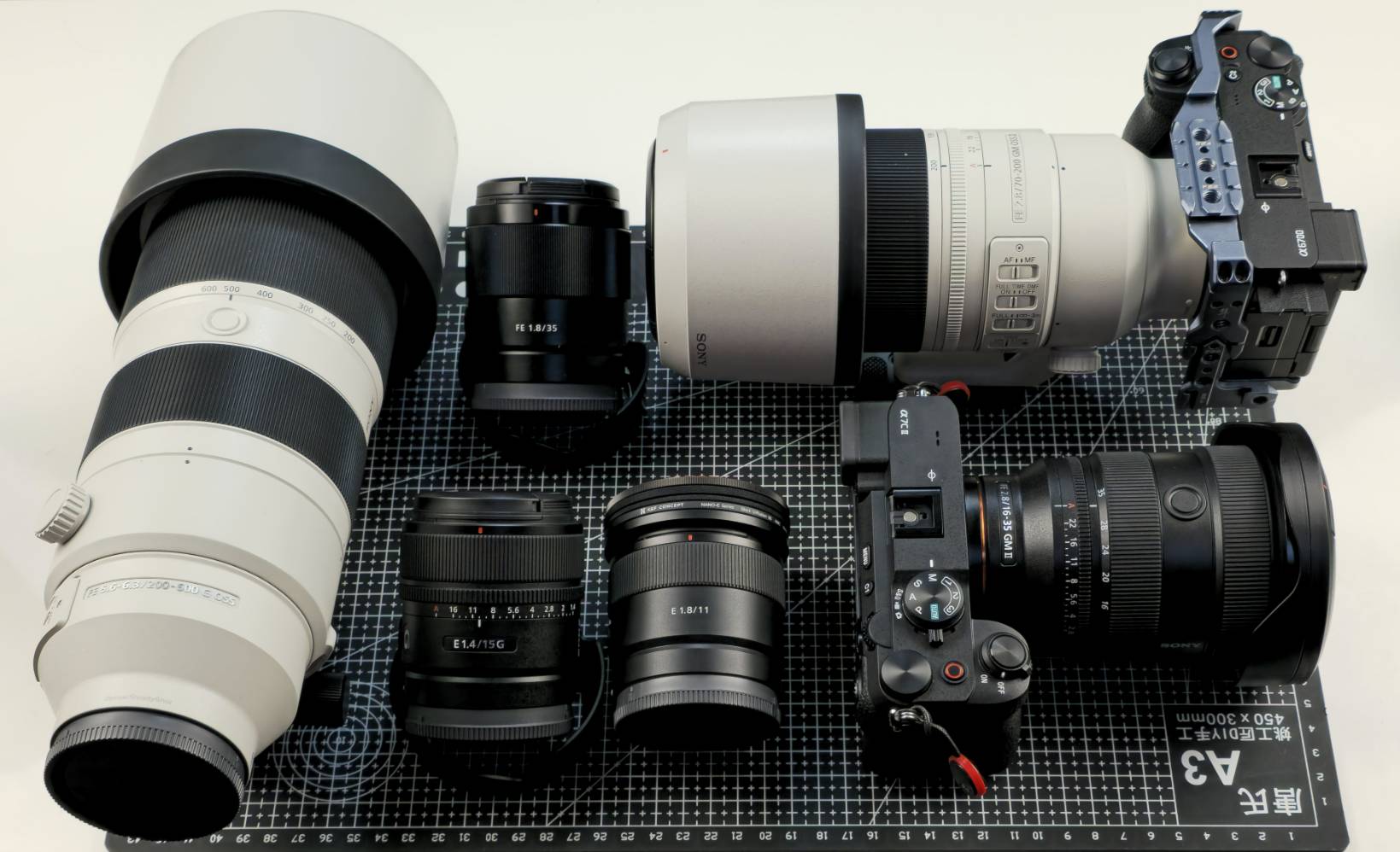
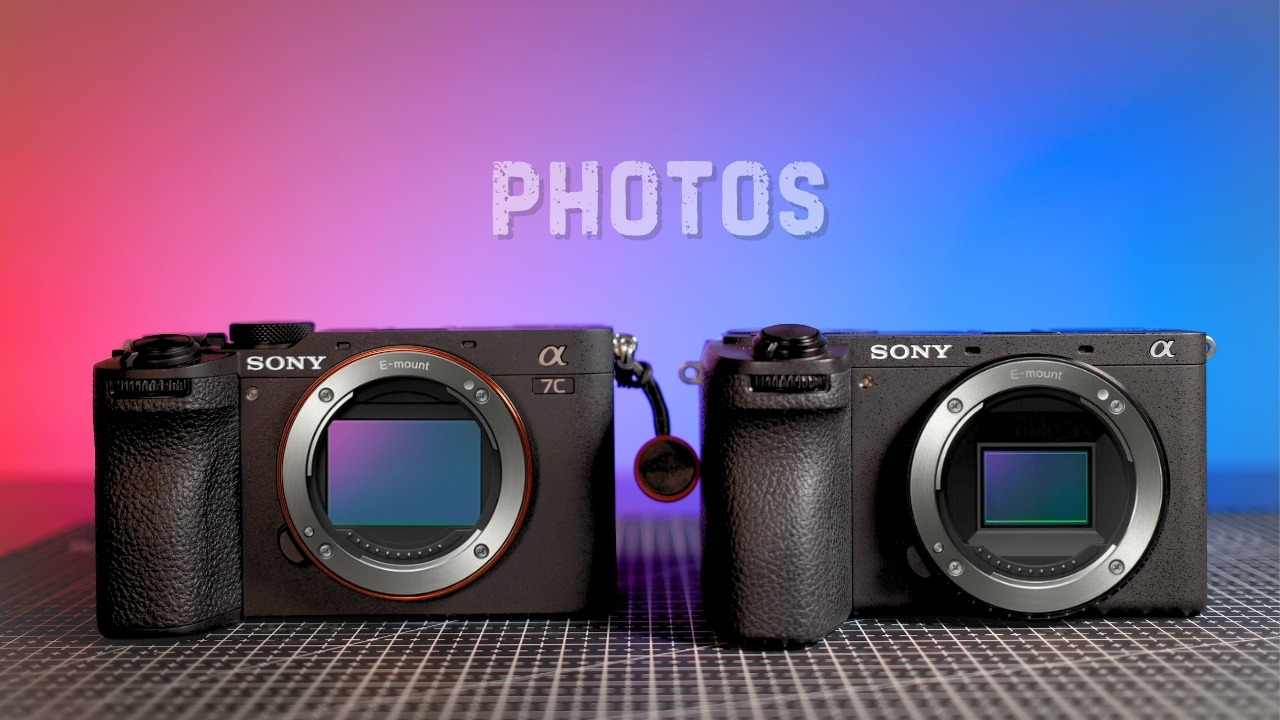
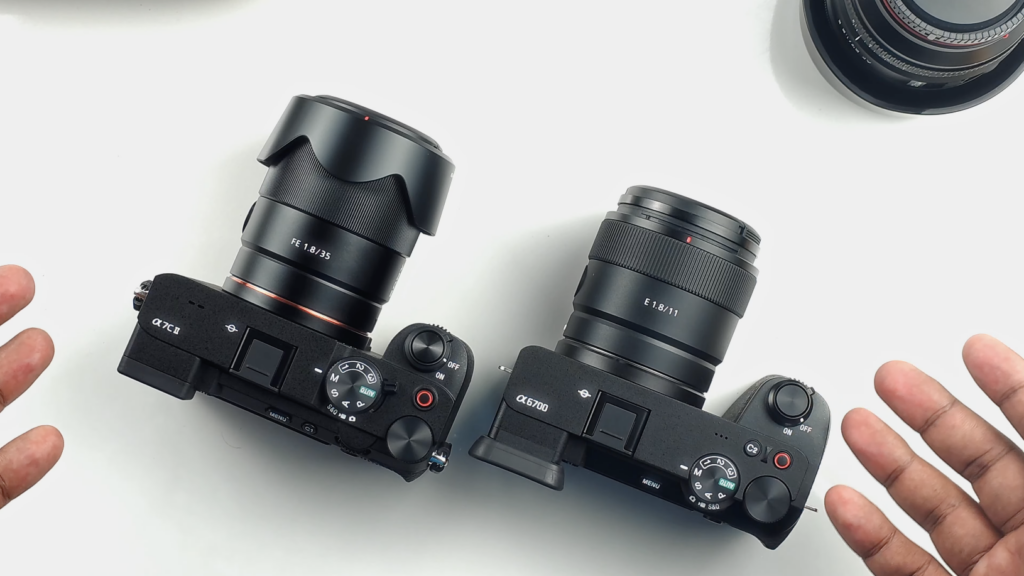
To understand this, I want to put these cameras side by side. Look at them. They are almost the same size. When it comes to portability A7cii weighs just over 20 grams more than the A6700 but having a full frame sensor, it makes it a much more compelling option to consider. This photo comparison is just one of the comparison videos I made between the Sony A6700 and the Sony A7Cii and you can find other comparison videos in the playlist in my channel.
Video Explanation
Blind Test
Before we get into the photo comparisons between these 2 cameras, I would like you to identify which photos are shot with Sony A6700 with the Viltrox 27mm F1.2 lens and the Sony A7Cii with the Sony 35mm F1.8 Full frame lens. One of them is Camera A and the other is Camera B. It is really a very close match up in terms of the focal length and aperture equivalence. I also want you to ignore the lens imperfections and focus on the noise and the feel of the images because that is what the people do when you deliver the images.
Here in this part of the video is where you will find the blind test on photos between Sony A7C2 and Sony A6700.
Before we get into which one is shot using which, let’s talk about the similarities and the differences between them.
Buttons, Dials and Grip – Sony A6700 and Sony A7Cii
These 2 cameras are very similar and it makes me wonder why Sony did not use the same body for both these cameras. On the outside, As I mentioned in another video, I prefer the amount of dials and buttons on the Sony A7Cii while I prefer the grip of the Sony A6700.
The reason being, the Sony A7Cii has 3 dials which allow me to configure aperture, Shutter speed and ISO on each dial but in the a6700, it only has 2 dials for aperture and shutter speed. Let me remind you, this from a photography perspective, and the photographer in me is talking about how he feels using these 2 cameras.
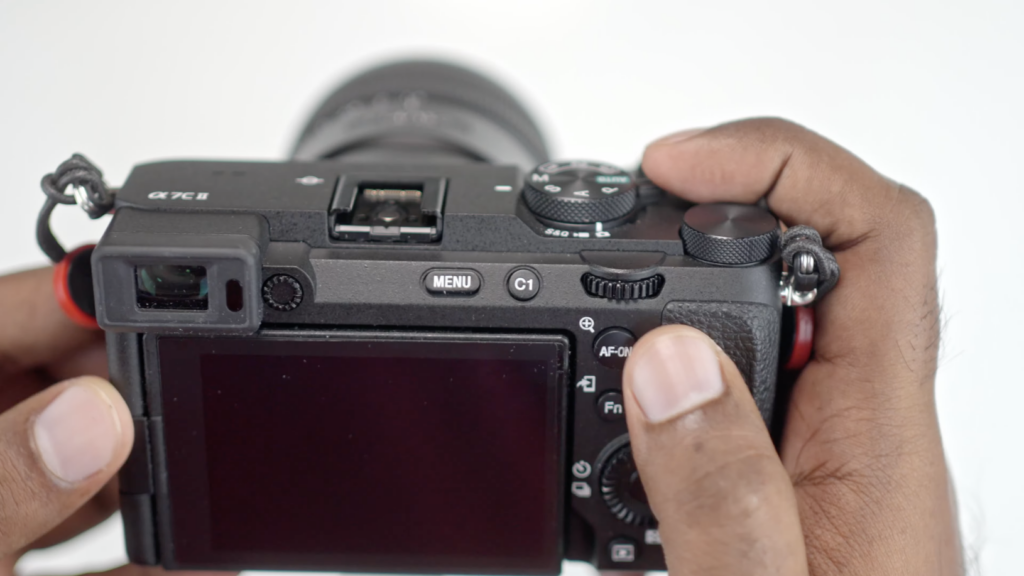
The ISO dials are available in both these cameras but you will have to move your thumb away from the gripping position, click the button to enter the “ISO change menu” and then you can turn the dial to change the ISO. It involves a lot of steps and it takes away my focus on composing and exposing the subject. That’s why I love the fact that there is a dedicated ISO dial on the top of the Sony A7cii where my thumb rests to quickly change the ISO. It makes manual shooting so much easier.
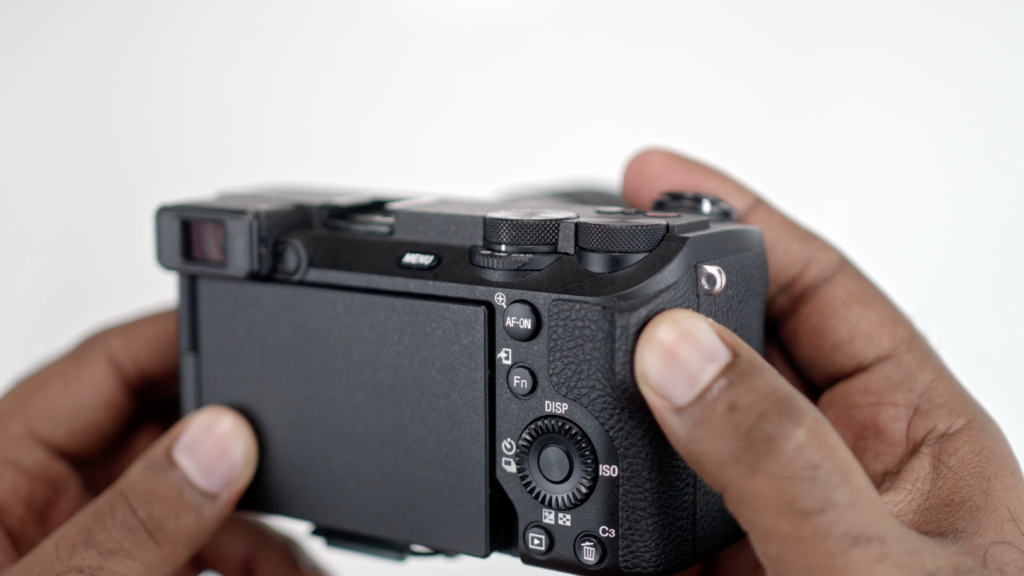
There are 3 custom buttons on the A6700 which is one more than the A7cii but I find that the custom button placement on the A6700 is not practical and it is difficult to access them. Usually I set one on the above to the focus area selection and the other one to the White balance and the bottom one is to switch between the silent or electronic shutter mode and mechanical shutter mode. As I can change the white balance from the screen and I set the WB before filming, I changed the custom button on the thumb grip on the A6700 to switch between the viewfinder and the monitor.
This comes in handy while shooting videos as the A6700 is my primary video camera. I will explain more on why I prefer the A6700 over the A7cii for videos in a future video.
So, I prefer the custom button placement more on the A7Cii as it is more accessible.
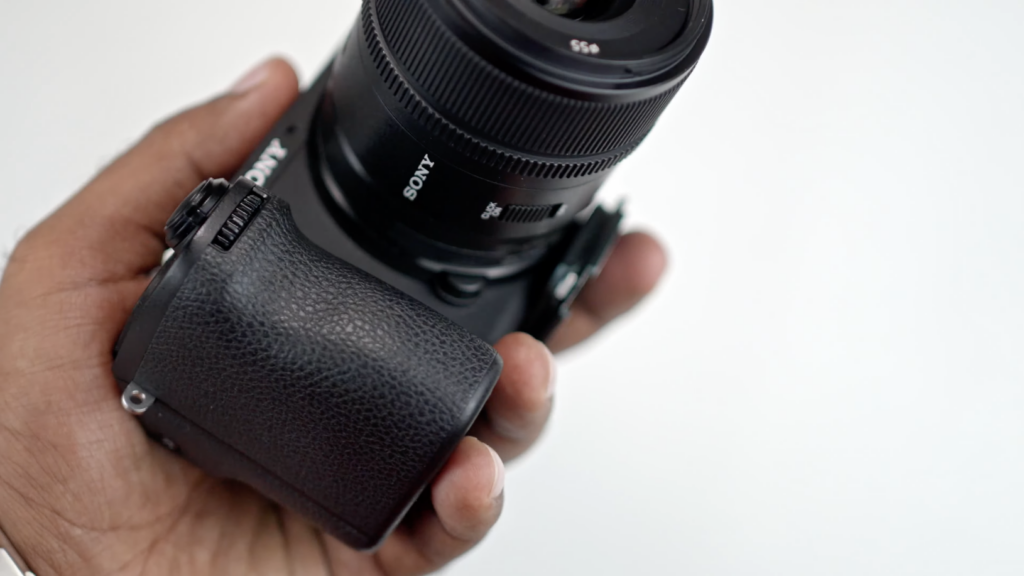
When it comes to the grip, Sony A6700’s grip is only second to the grip of the Sony A9iii in the sony ecosystem. It is even better than the Sony FX30 or FX3’s grip. It stays well in my giant hands for the size of the camera.
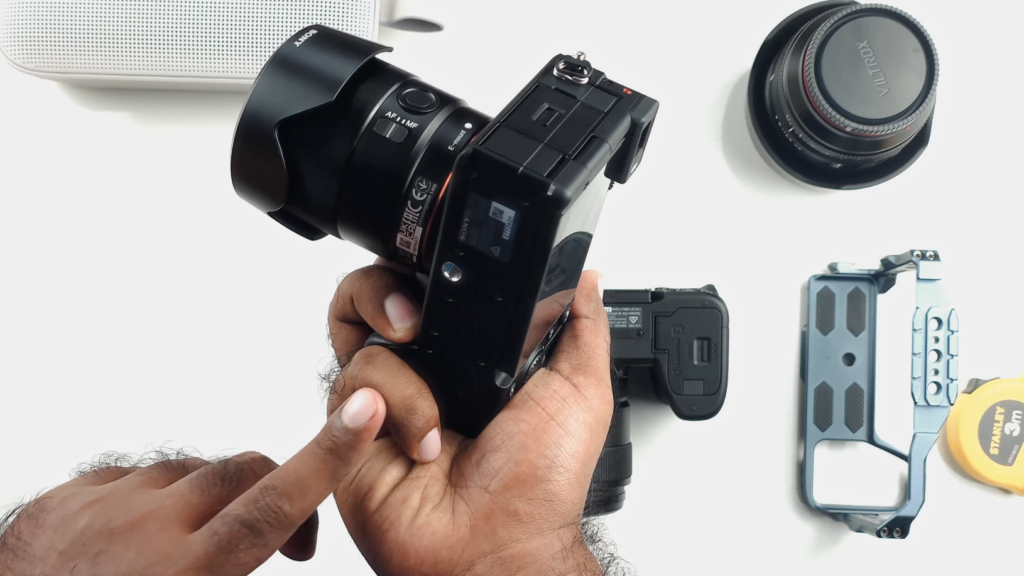
The A7Cii’s grip on the other hand is very shallow and small for me even to hold the camera. But it can be resolved with a grip from Smallrig for the A7Cii but nothing can add an extra dial on top of the A6700. So, for usability, the win goes to the A7Cii with a grip.
Similarities between Sony A6700 and Sony A7Cii
Let’s start with similarities between these 2 cameras shall we? There are loads and loads functions that are the same and here is the list of them. If you want to see everything, you can pause the video and take a screenshot of these tables.
General
| ILCE-7CM2 | ILCE-6700 | |||
| CAMERA TYPE | Interchangeable lens digital camera | Interchangeable lens digital camera | ||
| Lens Mount | E-mount | E-mount | ||
| Memory Card Slot | Slot for SD (UHS-I/II compliant) memory card | Slot for SD (UHS-I/II compliant) memory card | ||
| Pixel Shift Multi Shooting | – | – | ||
| COLOR TEMPERATURE RANGE | 2500 K – 9900 K | 2500 K – 9900 K | ||
| SUPPLIED BATTERY | One rechargeable battery pack NP-FZ100 | One rechargeable battery pack NP-FZ100 | ||
| Internal Battery Charge | Yes (Available with USB Type-C Terminal. USB Power Delivery compatible) | Yes (Available with USB Type-C Terminal. USB Power Delivery compatible) | ||
| USB POWER SUPPLY | Yes (Available with USB Type-C Terminal. USB Power Delivery compatible) | Yes (Available with USB Type-C Terminal. USB Power Delivery compatible) | ||
| OPERATING TEMPERATURE | 0 – 40 ℃ / 32 – 104 °F | 0 – 40 ℃ / 32 – 104 °F | ||
Firstly both these cameras are obviously Sony E-mount interchangeable lens mirrorless cameras.
They both have a single SD card slot which can accept up to UHS-II compliant V90 cards. I use Sandisk 128GB UHS-ii V90 cards with write speeds up to 260MB/s and read speeds up to 300MB/s.
Both do not have pixel-shift multi shooting. So there is no high-resolution photo capture capability in both these cameras unlike the Sony A7Rv.
The color temperature range in both these cameras are the same as well going from 2500K to 9900K.
Both can accept the same NP-FZ100 batteries.
Both these cameras have the same operating temperature from 0-40 deg C or 32-104 deg F.
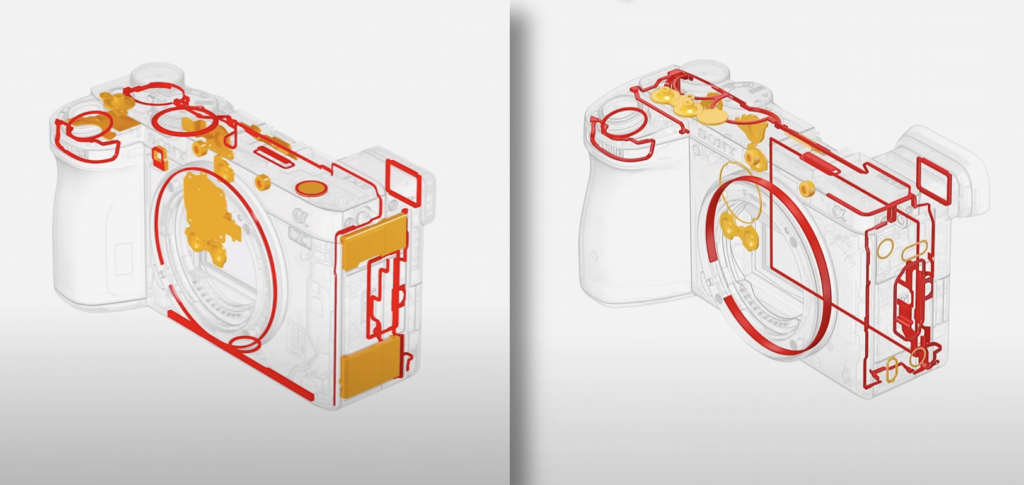
Both of these cameras are also weather sealed, however, the level of weather sealing might be different.
Shutter
| ILCE-7CM2 | ILCE-6700 | |
| Shutter Type | Mechanical shutter / Electronic shutter | Mechanical shutter / Electronic shutter |
| Shutter Speed | Mechanical shutterStill images: 1/4000 to 30 s, Bulb Electronic shutterStill images: 1/8000 to 30 s,Movies: 1/8000 to 1 s | Mechanical shutterStill images: 1/4000 to 30 s, Bulb Electronic shutterStill images: 1/8000 to 30 s,Movies: 1/8000 to 1 s |
| Electronic Front Curtain Shutter | Yes | Yes (ON/OFF) |
Both have the same Shutter capability as well. When shooting in electronic shutter mode in either of these cameras, the shutter speeds can go up to 1/8000th of a second while in Mechanical shutter mode, the shutter speed can only go up to 1/4000th of a second in both these cameras. If you want to freeze something like a hummingbird you would perhaps need faster shutter speeds.
The downsides of shooting in the silent shutter mode is that there might be banding issues and the dynamic range may not be as good as the mechanical shutter mode. But while shooting in mixed lighting conditions, I did not notice any banding issues in either of these cameras.
Focusing System
| ILCE-7CM2 | ILCE-6700 | |
| FOCUS TYPE | Fast Hybrid AF (phase-detection AF / contrast-detection AF) | Fast Hybrid AF (phase-detection AF / contrast-detection AF) |
| FOCUS POINT (Still Images) | Max. 759 points (phase-detection AF) | Max. 759 points (phase-detection AF) |
| RECOGNITION TARGET (STILL IMAGES) | Human, Animal, Bird, Insect, Car, Train, Airplane | Human,Animal,Bird,Insect,Car,Train,Airplane |
| RECOGNITION TARGET (MOVIES) | Human, Animal, Bird, Insect, Car, Train, Airplane | Human,Animal,Bird,Insect,Car,Train,Airplane |
| OTHER FEATURES | AF Track Sens. (Still), AF Subj. Shift Sensitivity (Movie), AF Transition Speed (Movie), Switch V/H AF Area, AF Area Regist., Circ. of Focus Point, Focus Map (Movie), AF Assist (Movie) | AF Track Sens. (Still), AF Subj. Shift Sensitivity (Movie), AF Transition Speed (Movie), Switch V/H AF Area, AF Area Regist., Circ. of Focus Point, Focus Map (Movie), AF Assist (Movie) |
| AF ILLUMINATOR | Yes (with Built-in LED type) | Yes (with Built-in LED type) |
They have the same focusing system as well with 759 focus points and various subject detection and other features. The focusing systems differ during the low light conditions which I will be discussing in the difference section. The focusing systems differ for videos as well which I will be discussing in a different video.
Metering System
| ILCE-7CM2 | ILCE-6700 | |
| METERING TYPE | 1200-zone evaluative metering | 1200-zone evaluative metering |
| METERING SENSITIVITY | EV-3 to EV20 (ISO100 equivalent with F2.0 lens attached) | EV-3 to EV20 (ISO100 equivalent with F2.0 lens attached) |
| EXPOSURE COMPENSATION | +/- 5.0 EV (1/3 EV, 1/2 EV steps selectable) | +/- 5.0 EV (1/3 EV, 1/2 EV steps selectable) |
| ANTI-FLICKER SHOOT. | Yes | Yes |
The exposure control between these 2 cameras are also the same when it comes to photography. Both have Anti-flicker shooting options as well.
Viewfinder
| ILCE-7CM2 | ILCE-6700 | |
| TYPE | 1.0 cm (0.39 type) electronic viewfinder (XGA OLED) | 1.0 cm (0.39 type) electronic viewfinder (XGA OLED) |
| Number of Dots | 2 359 296 dots | 2 359 296 dots |
| Magnification | Approx. 0.70x (with 50 mm lens at infinity, -1 m-1) | Approx. 1.07x (35 mm camera equivalent: Approx. 0.70x) with 50 mm lens at infinity, -1 m-1 |
| DIOPTRE | -4.0 to +3.0 m-1 | -4.0 to +3.0 m-1 |
| Eye Point | Approx. 22 mm from the eyepiece lens,19.6 mm from the eyepiece frame at -1 m-1 (CIPA standard) | Approx. 22 mm from the eyepiece lens,19.4 mm from the eyepiece frame at -1 m-1 (CIPA standard) |
| Finder Frame Rate Selection | NTSC mode:STD 60fpsHI 120fps PAL mode:STD 50fpsHI 100fps | NTSC mode:STD 60fpsHI 120fps PAL mode:STD 50fpsHI 100fps |
They both have the same viewfinder as well. Regarding the viewfinder, they are not as good as their competition but they are just functional when we need them.
LCD Screen
| ILCE-7CM2 | ILCE-6700 | |
| Monitor Type | 7.5 cm (3.0-type) type TFT | 7.5 cm (3.0-type) type TFT |
| TOUCH PANEL | Yes | Yes |
| Number of Dots | 1 036 800 dots | 1 036 800 dots |
| Adjustable Angle | Opening Angle: Approx. 176° , Rotation Angle: Approx. 270° | Opening Angle: Approx. 176° , Rotation Angle: Approx. 270° |
Both these cameras have the same functional, 3 inch, full touch screen – vari angle – LCD monitors with 1 million dots.
Image Stabilization
| ILCE-7CM2 | ILCE-6700 | |
| Type | Image sensor-shift mechanism with 5-axis compensation(compensation depends on lens specifications) | Image sensor-shift mechanism with 5-axis compensation(compensation depends on lens specifications) |
| MODE | Still images: On / OffMovie: Active / Standard / Off | Still images: On / OffMovie: Active / Standard / Off |
Both these cameras have in-body image stabilization to various degrees and I feel both do a really good job when shooting photos.
Other Features
| ILCE-7CM2 | ILCE-6700 | |
| OTHER FEATURES | Soft Skin Effect,Creative Look,Custom function,Picture Profile,Time-lapse,Auto Framing,My Image Style | Soft Skin Effect,Creative Look,Custom function,Picture Profile,Time-lapse,Auto Framing,My Image Style |
| CLEAR IMAGE ZOOM (STILL IMAGES) | Approx. 2x | Approx. 2x |
Both these cameras have the same amount of special features like soft skin, picture profiles, in-built time-lapse, etc and have up to 2x clear image zoom for photos. But mind you, it is only possible in JPG mode and with RAW enabled, you will not be able to use the clear image feature.
Flash
| ILCE-7CM2 | ILCE-6700 | |
| CONTROL | Pre-flash TTL | Pre-flash TTL |
| FLASH COMPENSATION | +/- 3.0 EV (switchable between 1/3 and 1/2 EV steps) | +/- 3.0 EV (switchable between 1/3 and 1/2 EV steps) |
| EXTERNAL FLASH COMPATIBILITY | Sony α System Flash compatible with Multi Interface Shoe, attach the shoe adaptor for flash compatible with Auto-lock accessory shoe | Sony α System Flash compatible with Multi Interface Shoe, attach the shoe adaptor for flash compatible with Auto-lock accessory shoe |
They do have very similar flash photography capability as well.
Playback and Accessibility
| ILCE-7CM2 | ILCE-6700 | |
| Playback Modes | Enlarged display modeProtectRatingShot Mark (Movie)Divider FrameCropPhoto Capture | Enlarged display modeProtectRatingShot Mark (Movie)Divider FrameCropPhoto Capture |
| Accessibility Functions | Screen ReaderFocus MagnifierFocus Map (Movie)Peaking DisplaySubject Recognition in AFTouch FocusTouch TrackingTouch ShutterTouch AEVari-angle LCD screenCustom functionEnlarge Menu Screen | Screen ReaderFocus MagnifierFocus Map (Movie)Peaking DisplaySubject Recognition in AFTouch FocusTouch TrackingTouch ShutterTouch AEVari-angle LCD screenCustom function |
Interface
| ILCE-7CM2 | ILCE-6700 | |
| PC INTERFACE | Mass storage / MTP | Mass Storage / MTP |
| MULTI / MICRO USB TERMINAL | -7 | -7 |
| USB TYPE-C TERMINAL | Yes (SuperSpeed USB 5 Gbps (USB 3.2) compatible) | Yes (SuperSpeed USB 5 Gbps (USB 3.2) compatible) |
| NFC | – | – |
| Sync Terminal | – | – |
| WIRELESS LAN (BUILT-IN) | YesWi-Fi CompatibleIEEE 802.11a/b/g/n/ac (2.4 GHz band/5 GHz band) | YesWi-Fi CompatibleIEEE 802.11a/b/g/n/ac (2.4 GHz band/5 GHz band) |
| Bluetooth | YesBluetooth Standard Ver. 4.2 (2.4 GHz band) | YesBluetooth Standard Ver. 4.2 (2.4 GHz band) |
| HDMI OUTPUT | HDMI micro connector (Type-D)3840 x 2160 (59.94p / 50p / 29.97p / 25p / 23.98p)1920 x 1080 (59.94p / 50p / 23.98p)1920 x 1080 (59.94i / 50i)YCbCr 4:2:2 10bit / RGB 8bit | HDMI micro connector (Type-D)3840 x 2160 (59.94p / 50p / 29.97p / 25p / 23.98p)1920 x 1080 (59.94p / 50p / 23.98p)1920 x 1080 (59.94i / 50i)YCbCr 4:2:2 10bit / RGB 8bit |
| Multi Interface Shoe | Yes (with Digital Audio Interface) | Yes (with Digital Audio Interface) |
| Mic Terminal | Yes (3.5 mm Stereo minijack) | Yes (3.5 mm Stereo minijack) |
| Headphone Terminal | Yes (3.5 mm Stereo minijack) | Yes (3.5 mm Stereo minijack) |
| REMOTE CONTROL (WIRELESS) | Yes (Bluetooth remote control) | Yes (Bluetooth remote control) |
| DC INPUT | – | – |
| FUNCTIONS | FTP Transfer Func.(Wired LAN(USB-LAN) USB Tethering, Wi-Fi)Send to smartphoneRemote control via smartphonePC Remote | FTP Transfer Func.(Wired LAN(USB-LAN) USB Tethering, Wi-Fi)Send to smartphoneRemote control via smartphonePC Remote |
They have the same level of play back and accessibility features as well as there is no difference between them when it comes to the input and output interface.
USB Streaming
| ILCE-7CM2 | ILCE-6700 | |
| VIDEO DATA FORMAT | MJPEGYUV42011 | MJPEGYUV42011 |
| VIDEO RESOLUTION | 3840 x 2160 (15p / 30p)3840 x 2160 (12.5p / 25p)1920 x 1080 (30p / 60p)1920 x 1080 (25p / 50p)1280 x 720 (30p)1280 x 720 (25p) | 3840 x 2160 (15p / 30p)3840 x 2160 (12.5p / 25p)1920 x 1080 (30p / 60p)1920 x 1080 (25p / 50p)1280 x 720 (30p)1280 x 720 (25p) |
| AUDIO DATA FORMAT | LPCM 2ch (16bit 48 kHz) | LPCM 2ch (16bit 48 kHz) |
| Microphone | Built-in, stereo | Built-in, stereo |
| Speaker | Built-in, monaural | Built-in, monaural |
| SETTING | ShadingChromatic AberrationDistortionBreathing (Movie) | ShadingChromatic AberrationDistortionBreathing (Movie) |
Both the cameras have the same capability to stream via USB port, same amount of lens compensation.
This is where the similarity ends. As you saw so far, the list is extensive and this is the main reason why anybody would think to compare these 2 cameras in the 1st place as you get most of the features in the cheaper and lighter APSC camera as to what the more expensive and heavier full frame camera has to offer.
Differences between Sony A6700 and Sony A7Cii
Contrary to popular belief, I personally believe that the price difference between these 2 cameras is completely justified for what the a7cii is offering. Apart from the differences that we will see in a moment, I should applaud the engineering effort put into making this camera a full frame highly functional pro level camera that really delivers!
As I compare these differences, you will understand why I feel that way.
General Differences
| ILCE-7CM2 | ILCE-6700 | |
| Colour Options | Silver / Black | Black |
| Anti-Dust System | Yes | – |
| Flash Sync. Speed | 1/160s (35mm full frame)1/200s (APS-C) | 1/160s |
| Compensation Effect | 7.0 stops(With FE 50mm F1.2 GM lens mounted) | 5.0 stops(With FE 50mm F1.2 GM lens mounted) |
The A7Cii comes in an additional Silver color.. Is it attractive? Not in my opinion! It kind of looks plasticy to me compared to the silver color options from the Fujifilm cameras.
The flash sync speed for the Apsc mode on the A7Cii is actually faster at 1/200th of a second compared to the 1/160 th of a second in the A6700. But I highly doubt anyone would be using flash with A7Cii’s APSC mode.
When it comes to image stabilization, both these cameras are compared using 50mm lens, meaning, the A6700 compensation effect is 5 stops at 75mm focal length. This is very good indeed! Practically, both are performing well!
Size and Weight
| ILCE-7CM2 | ILCE-6700 | |
| WEIGHT(WITH BATTERY AND MEMORY CARD INCLUDED) | Approx. 514 g / Approx. 1 lb 2.2 oz | Approx. 493 g / Approx. 1 lb 1.4 oz |
| BODY ONLY | Approx. 429 g / Approx. 0 lb 15.2 oz | Approx. 409 g /Approx. 0 lb 14.5 oz |
| Dimensions (W x H x D) | Approx. 124.0 x 71.1 x 63.4 mm,Approx. 124.0 x 71.1 x 58.6 mm (from grip to monitor) Approx. 5 x 2 7/8 x 2 1/2 inchesApprox. 5 x 2 7/8 x 2 3/8 inches (from grip to monitor) | Approx. 122.0 x 69.0 x 75.1 mmApprox. 122.0 x 69.0 x 63.6 mm (from grip to monitor) Approx. 4 7/8 x 2 3/4 x 3 inchesApprox. 4 7/8 x 2 3/4 x 2 5/8 inches (from grip to monitor) |
A7Cii is a tad bit heavier than the a6700 but the lenses for the a7cii are almost double the weight of the APSC lenses. We will discuss more on this later. Regarding the dimensions, both are more or less the same and what makes the absolute win for the A6700 is the grip. Sony nailed it with this camera and totally ignored the grip on the A7Cii. If only the A7Cii had the grip of the A6700, it would’ve been a complete package for photography.
What’s in the box?
| ILCE-7CM2 | ILCE-6700 | |
| WHAT’S IN THE BOX | Rechargeable Battery NP-FZ100Shoulder strapBody capAccessory shoe cap | Rechargeable Battery NP-FZ100Shoulder strapBody capAccessory shoe capEyepiece cup |
Also, what comes in the box between these two cameras is actually very important. Notice the difference? Yeah! The lack of Eyepiece cup. In fact the A7Cii doesn’t even have a slot for the eyepiece cup holder. But you know what? You would never seriously use the Electronic viewfinder as it is crap just like the a6700 but still the a6700 comes with the eyepiece up.
Battery & Power
| ILCE-7CM2 | ILCE-6700 | |
| Battery Life (Still Images) | Approx. 530 shots (Viewfinder)Approx. 560 shots (LCD monitor) | Approx. 550 shots (Viewfinder)Approx. 570 shots (LCD monitor) |
| Power consumption with Viewfinder | Still images: Approx. 3.7 W (with FE 28-60mm F4-5.6 lens attached) | Still images: Approx. 3.6 W (with E PZ 16-50mm F3.5-5.6 OSS lens attached) |
| Power consumption with LCD screen | Still images: Approx. 3.5 W (with FE 28-60mm F4-5.6 lens attached) | Still images: Approx. 3.5 W (with E PZ 16-50mm F3.5-5.6 OSS lens attached) |
When it comes to the power consumption, both consume very similar power for photos. It is just a tomato tomato situation. Both can easily shoot over 500 photos depending on the memory card size.
Anti-Dust System
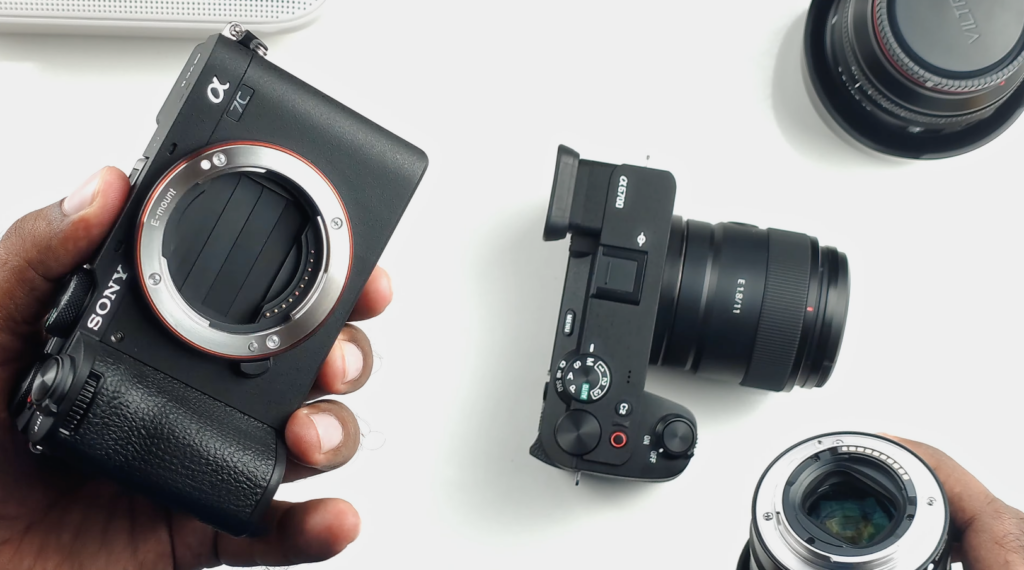
There is a Anti-Dust system available in the Sony A7cii that is nothing but fancy word for the shutter dropdown upon turning off the camera. Again this only works when the silent shutter is turned OFF to enable the mechanical shutter mode. If the camera were to be in the silent shutter mode, the Anti-dust system will be disabled.
Image Quality Comparison – Sony A6700 and Sony A7Cii
The difference between the image quality from the Full Frame vs the APSC sensors. Especially during the low light conditions.
Here are the results of the blind test comparison at this chapter mark.
Sensor Differences
| ILCE-7CM2 | ILCE-6700 | |
| SENSOR TYPE | 35mm full frame (35.9 x 23.9 mm) | APS-C type (23.3 x 15.5 mm) |
| Number of Pixels (total) | Approx. 34.1 megapixels | Approx. 27.0 megapixels |
| EFFECTIVE PIXELS | Approx. 33.0 MP max. | Approx. 26.0 MP max. |
To put it simply, just based on the surface area alone, the full frame sensor is close to 2.4 times larger than the APSC sensor and this should be an obvious explanation on why the full frame sensor performs better than the smaller sensor given they have the same size pixels on the sensor. But that’s not the case.
Even the pixel pitch of the A7Cii sensor is 5.1MicroM which is almost 1.4 times larger than the pixel pitch of the a6700 at 3.79 MicroM. With this, we can understand that the a7cii has a larger sensor and bigger pixels with a more effective resolution of 33MP than in the Sony A6700 with an effective sensor resolution of 26MP.
This means the A7Cii obviously performs much better than the A6700 in low light, gathering tonnes of light with its humongous pixel size. More on the low light performance between these 2 cameras, later in this video.
Recording Modes
| ILCE-7CM2 | ILCE-6700 | |
| MODES | RAW | RAW |
| MODES | JPEG | JPEG |
| MODES | HEIF (4:2:0 / 4:2:2) | HEIF (4:2:0 / 4:2:2) |
| MODES | RAW+JPEG | RAW+JPEG |
| MODES | RAW+HEIF | RAW+HEIF |
| 14bit RAW | Yes | Yes |
Both these cameras have the same recording options.
Compressions
| ILCE-7CM2 | ILCE-7CM2 | ILCE-6700 |
| 35mm full frame | APSC Mode | APS-C |
| Uncompressed | Uncompressed | |
| Lossless Compressed (L) | Lossless Compressed | |
| Lossless Compressed (M) | Lossless Compressed (M) | – |
| Lossless Compressed (S) | Lossless Compressed (S) | – |
| Compressed | Compressed | Compressed |
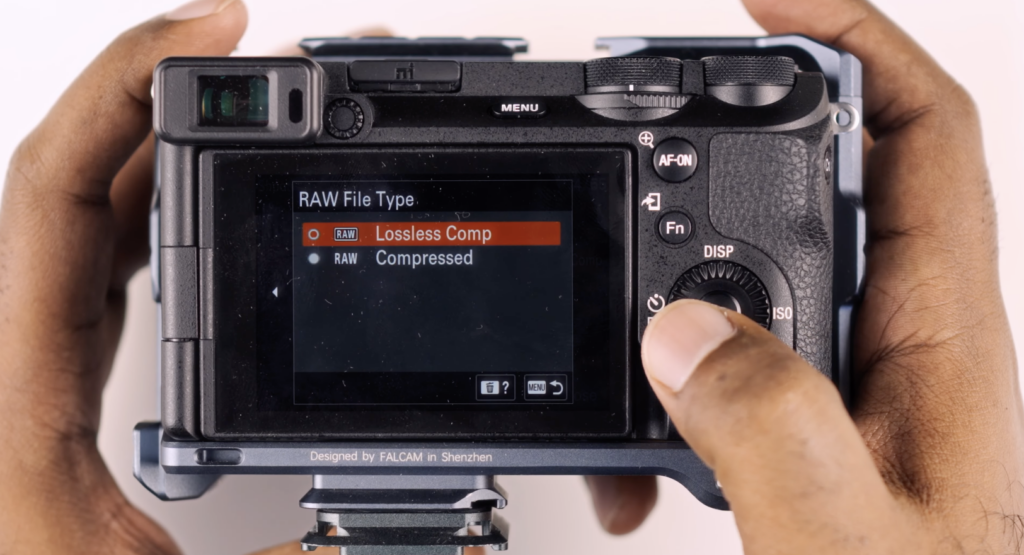
When it comes to RAW, the A6700 has only 2 recording options – either compressed or lossless compressed. It doesn’t have an uncompressed mode. But I find that the lossless compressed files are not that bad to edit and also size is efficient.
I never really missed uncompressed RAW recording which the A7Cii has. Editing uncompressed RAW files might be less demanding compared to the compressed RAW files if the file sizes are small but the A7Cii has 60+MB for every uncompressed RAW file whereas only about half the size for every compressed RAW file. With the huge size of the RAW images it does take every bit of your computer power to edit these uncompressed RAW files.
With that said, you might think the A7Cii is a much better option for photography with the sheer resolution and quality from the uncompressed output. But there are more reasons to come to the same conclusion.
Dynamic Range – Sony A7C2 vs Sony A6700
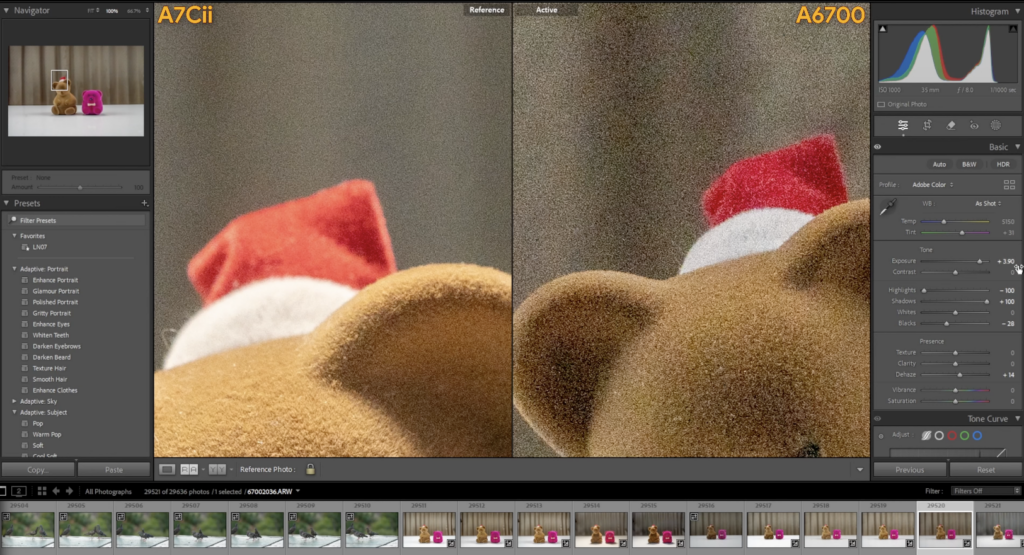
Let’s take a look at the A7Cii’s dynamic range. We have a few lighting conditions to see how well the images look when recovered from RAW images when overexposed by +2 EV according to the in-camera metering, under exposed by 2EV, backlit situation and almost pitch dark situation. Let’s do the same for the A6700 as well. Comparing them side by side, here is my take on how these cameras behave when the images were shot with the same settings.
For both the cameras, to get minimal noise, the best practice is to overexpose the image by approximately 1 EV and then recover the image in the post. I find this process to produce close to noise free images.
Increasing the exposure or pulling up the shadows create more noise on the A6700 than the A7Cii.
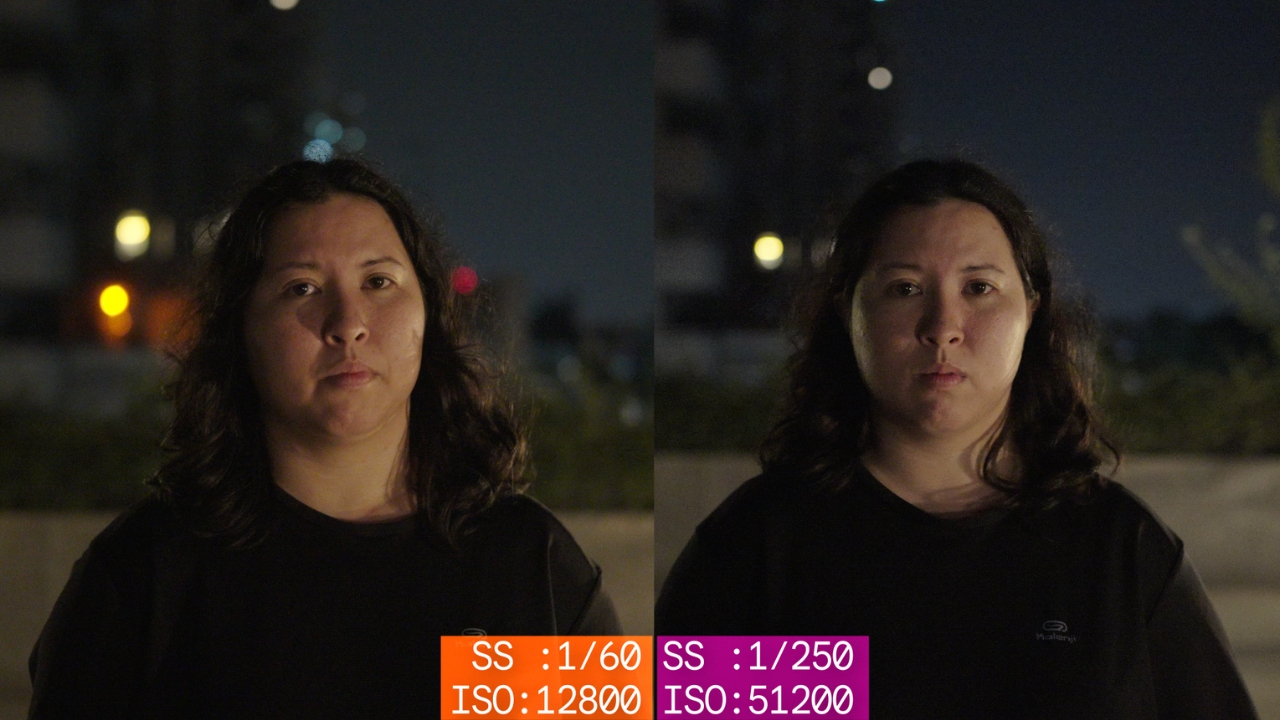
In pitch dark conditions, images from both cameras can be salvaged but the color noise in the A7Cii is significantly higher than the A6700. I would actually expect the A6700 to have more color noise but that’s clearly not the case.
There is a chance of miss focusing with the A6700 in low light conditions but A7Cii was performing flawlessly.
And finally the verdict for the dynamic range comes to the level of noise produced while salvaging the images from these cameras and evidently A7Cii produces clearer images than the A6700. But if I don’t have the A7Cii to compare the A6700 with, I would think the dynamic range would be great in the A6700.
If you want to play with these bear RAW files, I share the drive link for the folder containing these RAW file samples from both the a6700 and A7Cii.
One thing I learnt while testing these files is that the A7Cii’s dynamic range is exceptional at ISO800 having cleaner noise even when exposure is increased by 3 times and is cleaner than shooting at 12800 ISO. The same is not the case with the A6700. You are better off shooting the images at higher ISOs with the A6700.
14-bit Raw Recording
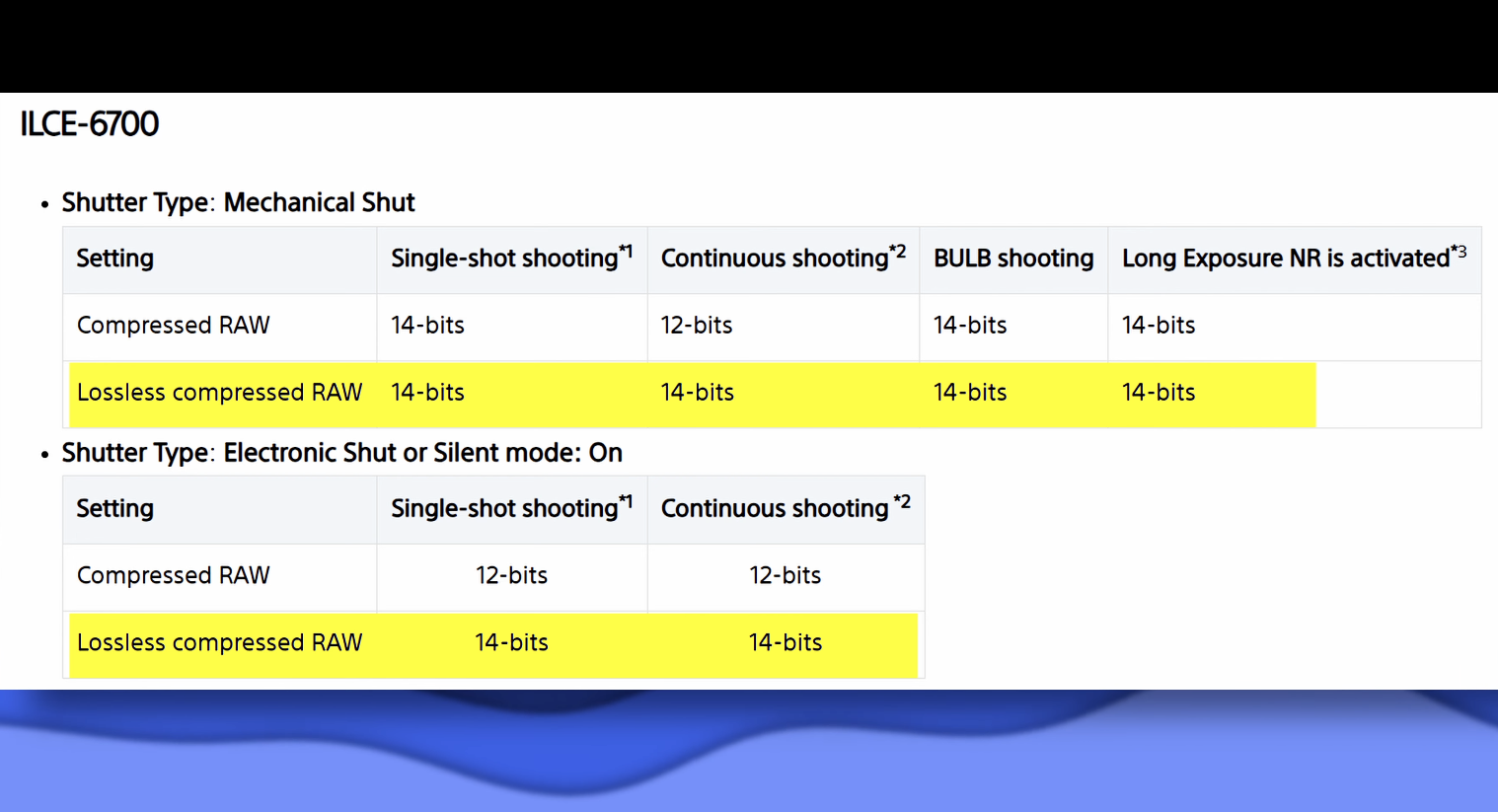
Both the cameras can shoot 14-bit raw in the lossless compressed and the a7cii can shoot 14-bit RAW in uncompressed mode as well. Which is fantastic.
If you were to shoot in the APSC mode in the a7cii, there is no option to shoot Large sizes in both Lossless compressed RAW mode and JPG mode and I really do not feel comfortable shooting in the APSC mode for photos.
High ISO and Low Light Performance
When it comes to the high ISO and low light performance between these 2 cameras for photos, There is clearly no surprise here, the A7Cii blows the A6700 out of the water! But is the A6700 good for low light for photos? It absolutely is sufficient in most cases given that you are using a bright enough lens like a F1.2 or F1.4 lens.
You see, the factor that makes you bump ISO up is the shutter speed. So in other words, when shooting landscapes, you have the opportunity to shoot at very slow shutter speeds. But when it comes to models or events or wildlife, when you want to freeze the frame, you will have to use faster shutter speeds, at the widest aperture. This leaves you with 2 options. Either you increase the light on the subject using flash or you bump up the ISO. And that the downside of the A6700’s smaller sensor as compared to the A7CII’s larger sensor and pixel size.
Low Light AF Performance
If you are wondering why the A6700 is not detecting the eye or face or even not autofocusing properly in low light, it is because the autofocus works better with light and the a6700 requires at least -3 EV to start detecting subjects. Less than that, it would struggle to autofocus. On the other hand the A7Cii can autofocus even at -4EV. That’s quite something and it is possible perhaps because of the bigger pixel size in the A7Cii.
What to choose for different scenarios?
When it comes to landscapes or astro photography, higher resolution is better and after using the near optically perfect GM lenses, I should say that you should aspire to have the GM lenses in your arsenal and so if you are going to get the GM lens you need a full frame camera to shoot them with and the A7Cii does the job. It is not the camera game alone anymore as this type of photo genre will test every tiniest aspect of the lens, the camera and most importantly the photographer’s skills.
I’ve shot milky way timelapse using just the A6000 with the 16-50mm version 1 kit lens. With the right skills you can achieve whatever you want, even with cheaper cameras. So, with practice, you can get very good results with the A6700 and a decent lens. But if you were to shoot using the A7Cii with the GM lenses, you will end up having more flexibility and capability of shooting in a variety of situations with one of the best image quality possible.
Verdict
If you are still wonder which one to get even after reading this long detailed blog, then here is the takeaway.
Here in this timestamp, there are photo samples from Sony A7C2 and Sony A6700 used to capture different scenarios.
There are 3 types of photographers in my opinion. The 1st type is the kind that makes money out of their photography skills and for those professionals, buying the A7Cii is an investment and you will not regret it.
The 2nd type of photographers are hobbyists including travel photographers. It is totally on your personal taste. You will not go wrong purchasing either of these 2 cameras. If you are happy with the 6700, you will be totally fine, but if you feel like you are not satisfied with A7Cii, you cannot be satisfied and you will always want more and more and more.
The 3rd type of photographers are the people like me who are having GAS, yeah, we want to use and feel everything. You better don’t get any of these and spend all your time in the Sony showroom trying and feeling the cameras and lenses. I pity our spouses.