Here is the video of what I am talking about:
Where do I even start?
Should I start by mentioning the shallow grip which is too small for my hands and is only comparable to the A7RV?
Or shall I start by mentioning my utter disappointment with the rolling shutter performance when shooting stills at 30FPS in electronic shutter mode?
No no, let me not start by bashing on the camera that I convinced my wife so hard to get for me as a christmas present.
Let me start with the story of why the only camera that made sense to me to get in 2025 is the Alpha 7V.
A couple of years ago, I said that the Sony A6700 was probably the camera with the least compromise. That still is true for the APSC camera segment. But in the full frame world, the competition is quite tight in 2025.
Being a Sony user for the past 3 years, I didn’t hesitate to scratch all that I had and start new with choosing the right camera system for me – starting with a suitable hybrid camera. My lens requirements are super simple and non-negotiable. I will come back to that later.
The partially stacked sensor on the Nikon Z6iii was the topic of the year when it got into the hands of the reviewers. The Nikon Z6iii performs great for both photos and videos. When I used it, the grip felt perfect. I don’t have those footage now, so bear with me. What impressed me with that camera was the amount of details I was able to recover from the NRAW N-log footage. It is quite impressive for me. The stabilization with the Z6iii was a bit wonky but I was also filming with 24-70mm F4 lens at – God only knows what focal length that was. Overall, I liked it. But how can I finalize my purchase with just trying 1 camera from 1 system?
So, I waited.
Then came the Nikon ZR for the win. I was at cloud nine when I saw that it was a compact style camera and that it didn’t overheat. All the other things such as the RED RAW recording and the massive display it offered, were just a bonus for me. The RED RAW footage was pretty great. I was handholding the entire time I tested the Nikon ZR with Nikon 24-120mm lens and the stabilization seems to work great as well. The price was reasonable. This made me ecstatic until I realized there isn’t a mechanical shutter on the camera. Without a mechanical shutter, it isn’t a true hybrid camera in my books.
But the good thing was that the price of the Nikon Z6iii came down with the announcement of the Nikon ZR, at least in Thailand. So I struck off the Nikon ZR and kept the Nikon Z6iii in the to-get-list.
Later Canon R6iii was announced and of course, it was the Nikon vs the Canon game. It was the 6K 60 FPS RED RAW RED Log vs the 7K 60FPS Canon RAW Clog2 battle. The Canon R6iii is another great camera. The handling is again, great – the buttons are at the right spots, except for the Photo-Video switch. It performs great and it even has more MP than the Nikon Z6iii or ZR. The Canon AF is far superior than the Nikon’s AF, not that Nikon’s was any bad. For me, all the specifications on the paper are awesome. Canon R6iii is certainly in the top position in my list right above the Nikon Z6iii except for the price.
<pick up the glass, slurp the next gulp of water, keep the glass down with force>
I need to cool down a bit. There is something that’s really bothering me. What’s the bigger picture? I am just making content for Youtube as a hobby – Do I actually need such RAW formats for videos?
Now that I think about it, I am using a 2 years old windows laptop for editing. With the increase in the file sizes and compression, things will only get harder for me to edit videos in the future.
How am I going to manage editing such massive files?
And how much storage am I going to keep buying?
And how will I justify to my wife the hard disk pile that keeps increasing?
What will I do when I get a Nikon Z6iii or Canon R6iii? There is no point in getting them if I don’t make use of their RAW recording capability right? Will I use these products to the fullest?
I know! There is a format that is super easy on my computer. Oh how did I not think about the All-Intra codec. All these talks about RAW and Opengate clouded my judgement. In Nikon, what is it called again? The ProRes 422 HQ with.. OMG the data rates!.. Huh.. at this speed, it is no different from the RAW file sizes. Okay, I think at this point, I should strike off the Nikon Z6iii from my list because neither my computer can really handle the smaller but highly compressed H.265 files nor can I keep buying hard drives to store the amazing RAW files.. Sorry Nikon, you were at the top of my list with price and handling but those file sizes! It is like buying a V12 engine car for $1000 bucks, I will have to burn through a lot more money on the fuel to just use the car.
Now let’s see if Canon R6iii has All-Intra codecs.
It even has usable bit rates:
These are great.
But I am paying so much for similar features to Z6iii, non-stacked sensor and only use the camera up to 4K video. So, the dilemma I face is that I am paying for the headline features of the camera which I may not mostly use. I like the rest like FPS for photos, handling, CLog2 and it would bother me forever that I paid for features I don’t need.
The same goes for the Panasonic S1ii as well which was later announced, seemed enticing in all the ways.. But still, the open gate, raw video, etc, are something I don’t really use.. Some things I liked about the Lumix S1ii are the capabilities to record directly to SSDs, backing up SDs to SSDs right from the camera, the screen and the stabilization. I also liked the lenses from Sigma for L-mount cameras. I would pay as much but again, I will be paying for more than what I would use.
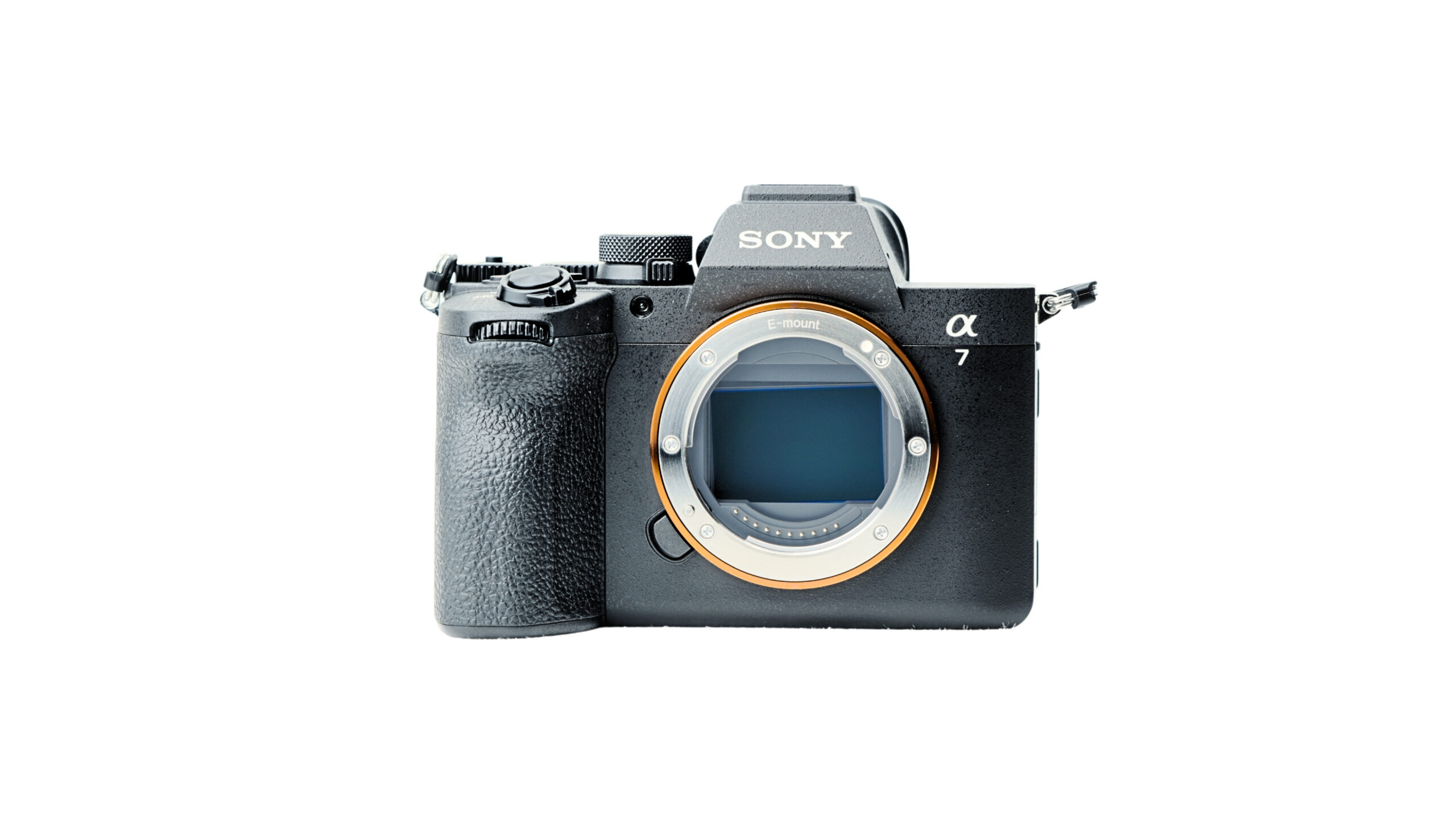
Sony A7V was the last of the bunch. The final Hybrid camera of the year. I was hopeful for A7V to have the RAW video recording capability at the price of Lumix S1ii. That would’ve leveled the playing field and I would have to pick one of these anyway which would’ve made my choice simpler. I would’ve chosen the Lumix S1ii. I wanted the A7V to not have so many useful features so I can switch systems.
But it didn’t.
The A7V comes with the best quality 4K possible with the 33MP sensor. 7k downsampled to 4k in XAVC S-I format footage, that too up to 60FPS is super detailed. The XAVC S-I is the format that I mostly used in the past 3 years in all the Sony cameras I owned and I felt like this is exactly what I needed – 100% usable. The data rates are only up to 600Mb/s which means, they can be recorded using V90 SD cards. No need to get the expensive CF-Express Type A cards.
But I still have 1 with me, because 1TB v90 UHSII SD cards are rare and are over $600 US while about 1TB CF Type A cards are less than $600Dollars with much faster data transfer speeds, which will be helpful to clear the buffer faster for photos.
So, I am happy that I will benefit from the best of what the camera has to offer without breaking the bank on the SD cards or Hard drives.
For me, coming from A7Cii, 4k oversampled 60FPS recording without crop and with lesser rolling shutter is the biggest reason to consider the A7V. Everything on top is a bonus.
The dual USB-Type C with much faster transfer speeds in one, The 4-axis multi-angle monitor and the 14-bit RAW files in continuous burst modes are things that I feel justified to pay for the A7V.
These are a lot more useful features than the RAW or open gate video capabilities that competition still needs to catch up with Sony.
Some of the other things I love what Sony has offered with A7V
Creative looks:
FL2 and FL3 film creative looks. I’ve started to use these JPGs right out of the camera.
Not overheating in the Thailand weather under direct sun filming 4k 60FPS in XAVC S-I format for over 30 mins is something I really appreciate. I don’t record long form videos so I can’t comment about overheating in those conditions.
AF is super impressive as always:
No matter the situation – busy background or not, the subject detection and lock-on tracking works impressively. Love it from a camera at this price.
4K 120FPS
Is something I wanted but I am glad it is just with a 1.5x crop. I love the footage I get out of it. I even liked 120 FPS footage from the Sony A7C2 in HD quality, so 4k 120FPS is definitely more useful. Guess what, the data rate is just 280 Mb/s while recording 4K 120FPS in XAVC HS format.
The A7V doesn’t have everything I need actually. It just has most of them. Of course, every camera has some kind of compromise.
These are the reasons why this camera made sense to me. But again, everything is not perfect with this camera.
Here are some of the things I wish the A7V had:
- Pixel shift mode for when I need it for landscapes and product shots.
- Faster readout speed so I get the birds as they are.
- 4K 120FPS in XAVC S-I format. Yes, it would mean the data rate will be double that of 60FPS but yeah, it would be easy on my computer. We don’t film at such high frame rates all the time anyway.
With that, I will be more than content with the A7V as it fulfills my content creation needs.
Since this video is already getting longer than I wanted, I intentionally left out a lot of things I want to talk about the A7V in this video. I will cover them in the next part of the series, so stay tuned by subscribing to the channel and hit like if you like the video. Hope you will make a responsible purchase decision.
Peace.